Welcome to Question for Physiotherapists March 2026. This month Dr John Negrine discusses tumours of the foot & ankle.
Save the Date: Saturday, 1st August 2026for the 2026 Orthopaedic Update at UNSW and via webinar.
If you have a Question that you would like us to answer please send your Questions to education@orthosports.com.au
Dr John Negrine
QUESTION | Please provide a brief overview of tumours of the foot and ankle.
ANSWER | Tumours of the foot and ankle are relatively uncommon compared with those in other parts of the musculoskeletal system, but they present unique diagnostic and management challenges. They may arise from bone, cartilage, synovium, tendon sheath, nerve, blood vessels, or soft tissue structures. Although the majority are benign, malignant tumours can occur and must be identified promptly to ensure appropriate treatment.
The most common tumour in the foot is a ganglion. Ganglions are fluid-filled, readily diagnosed clinically or by ultrasound and are rarely a cause for concern from a malignancy point of view.
Solid tumours are more of concern. Any tumour over 5 cm in diameter which is growing definitely needs specialist review. Common solid tumours include enchondromas and giant cell tumour of the tendon sheath.
The most common malignant tumour of the foot and ankle (excluding skin tumours such as squamous cell carcinoma and malignant melanoma) is a synovial sarcoma.
Most soft tissue sarcomas are not painful and so pain is not a good guide to malignancy.
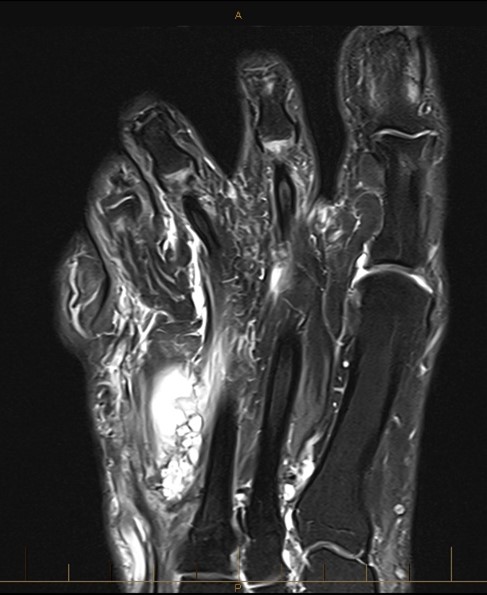
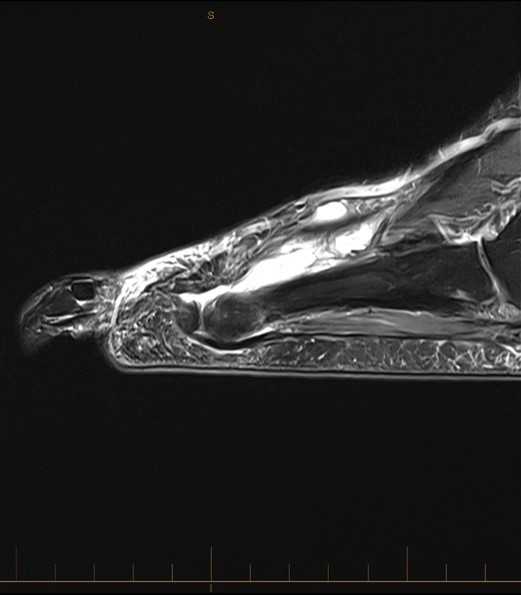
44 year old lady with a slowly growing swelling on her foot. MRI shows a multiloculated ganglion.
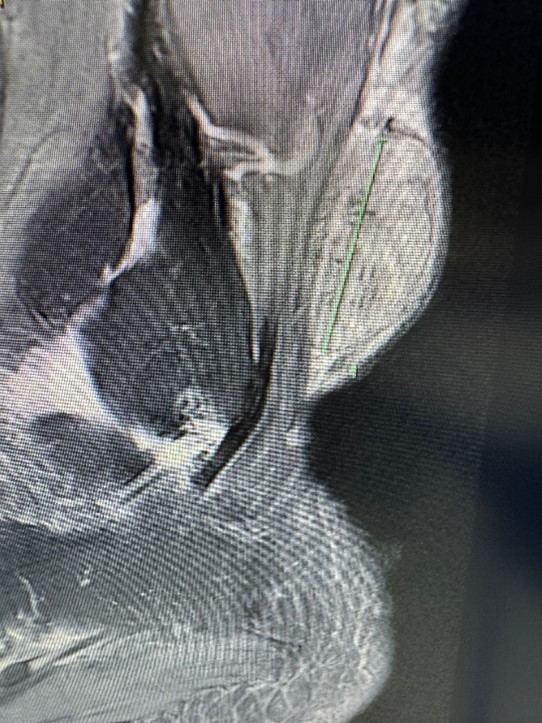
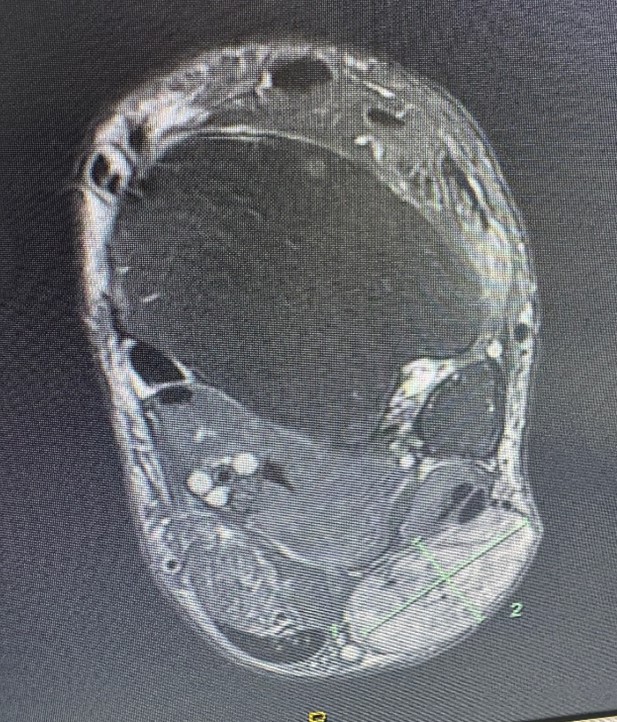
67 year old man with a large slowly growing tumour on the back of his ankle. MRI showed central necrosis and the size was of concern. The tumour turned out to be a benign angioleiomyoma